ShowDocument is an online web application that allows multiple users to conduct web meetings, upload, share and review documents from remote locations. The service was developed by the HBR Labs company, established in 2007. == Features == Users can collaborate on and review documents in real time, with annotations and text being visible to all users and accessible for co-editing. The idea of every user being able to annotate can cause conflicts within the sessions, and so main navigation options are under the "presenter"'s control - which can be given to a different user as well. An earlier version of the application, by contrast, had allowed all users to navigate and edit at once, causing the system to drop all incomplete edits. It is possible to draw and write on a virtual whiteboard, and to stream a YouTube video to a group in full synchronization. A feature also exists for co-browsing of Google Maps. Entering an open session in the application can be done with a given code number, or by receiving a link through an Email message. Different file formats can be uploaded and saved either online or offline, such as PDF. A PDF file's text cannot be edited - text is edited through the separate text editor. Although the platform contains a text chat, it is not intended to replace instant messaging software, as there are no extensive messaging features. The application has a paid and free version, with the free version having a few limitations: audio and video options are disabled, number of participants is limited and sessions are time-limited. == Development == ShowDocument was first developed in 2007. On September 8, 2009, HBR labs released a new update which included features such as secure online document storage and mobile device support.
T-pose
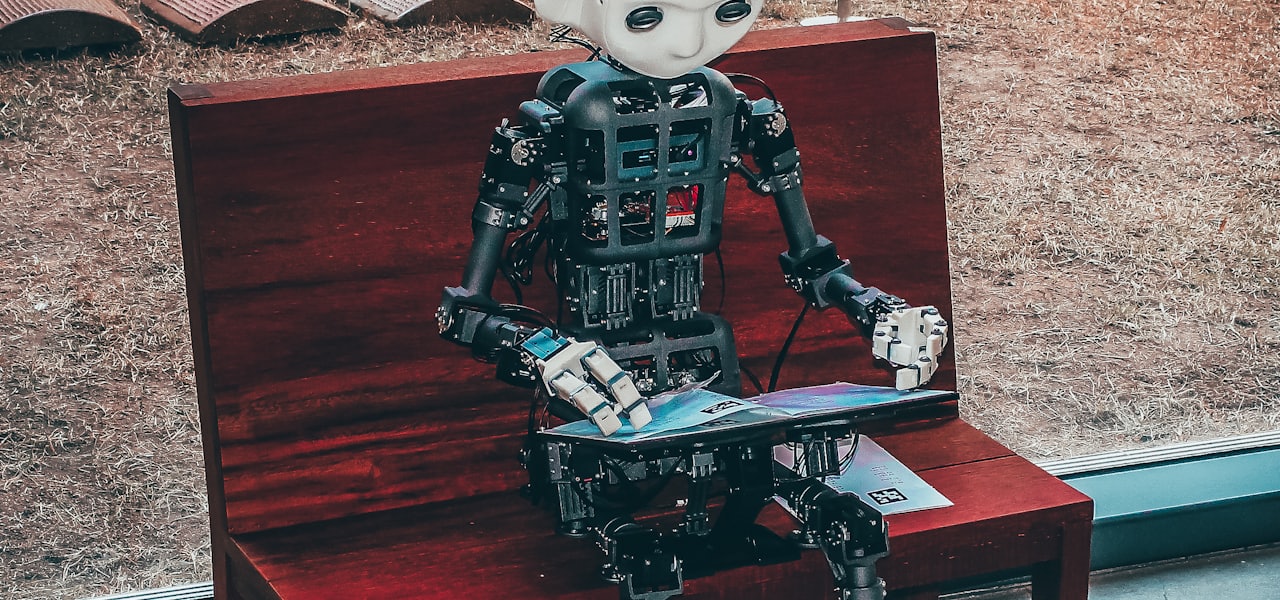
In computer animation, a T-pose is a default posing for a humanoid 3D model's skeleton before it is animated. It is called so because of its shape: the straight legs and arms of a humanoid model combine to form a capital letter T. When the arms are angled downwards, the pose is sometimes referred to as an A-pose instead. Likewise, if the arms are angled upward, it is called a Y-pose. Generic terms encompassing all these (especially for non-humanoid models) include bind pose, blind pose, and reference pose. == Usage == The T-pose is primarily used as the default armature pose for skeletal animation in 3D software, which is then manipulated to create animation. The purpose of the T-pose relates to the important elements of the body being axis-aligned, thereby making it easier to rig the model for animation, physics, and other controls. Depending on the exact geometry of the model, other poses such as the A-pose may be more suitable for vertex deformation around areas such as the shoulders. Outside of being default poses in animation software, T-poses are typically used as placeholders for animation not yet completed, particularly in 3D animated video games. In some motion capture software, a T-pose must be assumed by the actor in the motion capture suit before motion capturing can begin. There are other poses used, but the T-pose is the most common one. == As an Internet meme == Starting in 2016 and resurfacing in 2017, the T-pose has become a widespread Internet meme due to its bizarre and somewhat comedic appearance, especially in video game glitches where a character's animation is unexpectedly supplanted by a T-pose. In a prerelease video of the game NBA Elite 11, the demo was filled with glitches, notably one unintentionally showing a T-pose in place of the proper animation for the model of player Andrew Bynum. The glitch later gained fame as the "Jesus Bynum glitch". Publisher EA eventually cancelled the game as they found it unsatisfactory. A similar occurrence happened with Cyberpunk 2077. In the 2023 Formula One season, driver George Russell performed a T-pose in the opening credits of the series' TV broadcasts. This quickly became a meme within the motorsports community. Russell repeated the pose after claiming pole position at the 2024 Canadian Grand Prix and winning the 2024 Austrian Grand Prix.
Foundry VTT
Foundry Virtual Tabletop, commonly shortened to Foundry VTT or FVTT, is a commercial, self-hosted virtual tabletop application for role-playing games. It provides a stage for visualizing the game environment and tools allowing the game master and players to organize and track statistics and notes. The software is highly modular and depends on the community-maintained ecosystem of add-on modules that modify the software's behavior and implement different game systems. Perpetual licenses, which include updates, are offered for a one-time fee. == Features == Foundry Virtual Tabletop is a highly modular Node.js web application that is run locally by the Gamemaster or hosted on a remote server. Players connect to their gamemaster's Foundry VTT instance over the network using their web browser. It is system-agnostic in that its core feature-set is not restricted to a specific game system. Systems, specific features and game content are implemented as add-on modules, which can be individually downloaded from a public repository. The module repository contains paid, official content, as well as freely available community-made modules that enhance functionality of the software. As of May 2025, 350 individual game systems are implemented as modules. Individual settings created by the Game Master are termed Worlds in the interface and contain the list of modules that should be loaded as well as world-specific content, which can be added by the gamemaster. This content is grouped into Scenes, Actors, Items and Journals. Battle and world maps are created as Scenes, which contain the backdrop and data on placement of walls, light sources and other entities. Tokens representing Actors, which are player characters, vehicles or NPCs, can be placed on these Scenes to be moved by the user that owns them. Other entities that interact or integrate with actors are termed Items; these can be objects, but also game system-specific concepts such as character classes. Journals are text documents that can link to other entities present in the World or modules. Viewing and editing permissions can be set individually for each entity. The software features a custom lighting engine that determines visibility of certain areas on each battle map depending on the position of players' characters, also revealing areas covered by fog of war. It also contains tools for map creation and comes with a small asset library. == History == Foundry Gaming LLC founder Andrew Clayton, commonly known under his online nickname Atropos, began development of Foundry VTT in 2018 for personal use after becoming dissatisfied with the feature set and business models of other virtual tabletops. Foundry VTT was initially developed for Linux, which remains its primary platform, with support for other platforms having been developed later. Foundry Gaming LLC was incorporated in Spokane, Washington on October 9, 2018, with the software remaining in private beta-testing until May 2020, when it was publicly released. In November 2020, Cubicle 7 partnered with Foundry to bring official content modules for its game system Warhammer Fantasy Roleplay to Foundry VTT. Later, in 2025, Clayton would state that this first major publisher deal was of significant importance to Foundry VTT's growth and credits the community developers of the WFRP system module for making it possible in the first place. In November 2023, Paizo partnered with Foundry to bring official content modules for Pathfinder Roleplaying Game to Foundry VTT. In January 2024, Foundry publicly announced its partnership with Wizards of the Coast in bringing official Dungeons & Dragons content to Foundry VTT, with the first official module, Phandelver and Below: The Shattered Obelisk, having been released in February 2024. == Development == As of 2023, the Foundry VTT software itself is being developed and managed by a team of 9 people, while a content team of 12 people is working with partnered publishers to compile content into downloadable modules. The content team also develops in-house content published by Foundry Gaming LLC. Stated goals are to create a virtual tabletop software that offers a one-time purchase and content ownership, make use of modern web technologies, and provide a platform for developers to build upon. Clayton has stated that integration of Generative AI into Foundry VTT is not planned, citing ethical and legal concerns and calling its usage within the industry a "betrayal of the creative people who made the TTRPG industry what it is in the first place". == Reception == Foundry VTT is one of the most popular virtual tabletops for TTRPGs; in particular, as a self-hosted web-based VTT, it is known as a modern alternative to the software as a service Roll20. Wargamer named it one of the three "best virtual tabletops for D&D in 2023", noting its active community and high degree of technical complexity, which allows for customization not seen in other products at the cost of a much steeper learning curve. Comic Book Resources called it an "underrated gem" and "incredibly versatile" for similar reasons, while also praising its lighting engine and visual fidelity. As the previously mentioned outlets do, Foundry's modular ecosystem and technical implementation are often mentioned as good features, but also as a source of frustration for new users. In a video interview, Clayton acknowledges this issue and affirms that the development team intends to make usage of more technical features "friction-less" and will reduce module breakage between updates in the future.
MeeMix
MeeMix Ltd is a company specializing in personalizing media-related content recommendations, discovery and advertising for the telecommunication industry, founded in 2006. On January 1, 2008, MeeMix launched meemix.com, a public personalized internet radio serving as an online testbed for the development of music taste-prediction technologies. Subsequently, MeeMix released in 2009 a line of Business-to-business commercial services intended to personalize media recommendations, discovery and advertising. MeeMix hybrid taste-prediction technology relies on integrating machine learning algorithms, digital signal processing, behavior analysis, metadata analysis and collaborative filtering, and is provided via API web service. In August 2009, MeeMix was announced as Innovator Nominee in the GSM Association’s Mobile Innovation Grand Prix worldwide contest. As of 2013, MeeMix no longer features internet radios on meemix.com. On Sep 28, 2014, meemix.com went offline.
List of C++ software and tools
This is a list of notable software and programming tools for the C++ programming language, including libraries, web frameworks, programming language implementations, compilers, integrated development environments (IDEs), and other related software development utilities. == Compilers and IDEs == AMD Optimizing C/C++ Compiler — proprietary fork of LLVM + Clang for Linux C++Builder — rapid application development (RAD) environment Clang – compiler front end for C, C++, and Objective-C, part of LLVM CLion — C++ IDE by JetBrains Code::Blocks — open-source cross-platform IDE that supports multiple compilers including GCC, Clang and Visual C++ CodeLite — cross-platform IDE for the C/C++ programming languages using the wxWidgets toolkit CodeSynthesis XSD – XML Data Binding compiler Dev-C++ — MinGW or TDM-GCC 64bit port of the GCC as its compiler GCC – GNU Compiler Collection Intel C++ Compiler – proprietary high-performance compiler by Intel KDevelop — IDE part of the KDE project and is based on KDE Frameworks and Qt, the C/C++ backend uses Clang. Microsoft Visual C++ – proprietary C++ compiler and IDE for Windows Oracle Developer Studio — Solaris, OpenSolaris, RHEL, and Oracle Linux operating systems. Qt Creator — part of the SDK for the Qt GUI application development framework and uses the Qt API SlickEdit — text editor and IDE Turbo C++ – legacy C++ IDE and compiler popular in the 1990s Understand — IDE that enables static code analysis through an array of visuals, documentation, and metric tools. Visual Studio — integrated development environment by Microsoft that supports C++ Visual Studio Code — integrated development environment by Microsoft that supports C++ Xcode — Apple IDE to develop macOS, iOS, iPadOS, watchOS, tvOS, and visionOS that supports C++ source code. == Debuggers == Allinea DDT – a graphical debugger dbx — a proprietary source-level debugger GNU Debugger – portable debugger that runs on many Unix-like systems Modular Debugger — a C/C++ source level debugger for Solaris and derivates Undo LiveRecorder — time travel debugger == Libraries == Active Template Library – template-based C++ classes developed by Microsoft Apache MXNet — deep learning framework Apache Xerces – parsing, validating, and serializing and manipulating XML. Asio — networking and low-level I/O library Bitpit — scientific computing and mesh manipulation library Boost — collection of peer-reviewed libraries Botan — cryptography library C++ AMP – easy way to write programs that compile and execute on data-parallel hardware, such as graphics cards and GPUs C++ Standard Library — standard library for the language C++/WinRT — library for Microsoft's Windows Runtime platform, designed to provide access to modern Windows APIs. C3D Toolkit — geometric modeling kernel Caffe — deep learning framework CAPD — library for rigorous numerics and dynamical systems Cassowary — constraint-solving toolkit that efficiently solves systems of linear equalities and inequalities Cinder — library for creative coding ClanLib — cross-platform game SDK CMU Sphinx — speech recognition system Crypto++ — cryptographic algorithms library Dlib — general-purpose cross-platform library Dune — partial differential equations using grid-based methods fastText — text representation and text classification library FLTK — GUI toolkit Geospatial Data Abstraction Library — geospatial data access library GDCM — image library General Polygon Clipper — polygon clipping library GiNaC — computer algebra system that uses Class Library for Numbers for implementing arbitrary-precision arithmetic GLFW — OpenGL and window management library HarfBuzz — text rendering and typesetting library High Efficiency Image File Format — digital container format for storing individual digital images and image sequences ITK — image analysis library Integrated Performance Primitives — domain-specific functions that are highly optimized for diverse Intel architectures Jackets library — GPU computing library JSBSim — open-source flight dynamics model JUCE — framework for audio applications KDE Frameworks — collection of libraries from the KDE project KFRlib — digital signal processing framework LEMON — library for optimization and graph problems LevelDB — key–value database library Libdash — MPEG-DASH streaming library libLAS — reading and writing geospatial data encoded in the ASPRS laser (LAS) file format libsigc++ — typesafe callbacks LibRaw — free and open-source software library for reading raw files from digital cameras libSBML — application programming interface (API) for the SBML (Systems Biology Markup Language) LIBSVM — sequential minimal optimization (SMO) algorithm for kernelized support vector machines Libx — DirectX .X files graphics library Loki — collection of design patterns LIVE555 — multimedia streaming library Metakit — embedded database library Microsoft Cognitive Toolkit — deep learning toolkit Microsoft Foundation Class Library — object-oriented library for developing desktop applications for Windows Microsoft SEAL — homomorphic encryption library mlpack — machine learning and AI library Mobile Robot Programming Toolkit — robotics research library Object Windows Library — Object Windows Library, superseded by VCL Open Cascade — CAD and 3D modeling library Open Asset Import Library — 3D model import library to provide a common API for different 3D asset file formats OpenCV – computer vision and machine learning library OpenFOAM — computational fluid dynamics toolkit OpenH264 — real-time encoding and decoding video streams in the H.264/MPEG-4 AVC format OpenImageIO — image processing library Open Inventor — higher layer of programming for OpenGL OpenNN — neural networks library OpenVDB — sparse volume data library openFrameworks — creative coding toolkit OpenRTM-aist — robotics middleware library Oracle Template Library — database access that supports IBM Db2 and Open Database Connectivity Orfeo toolbox — remote sensing image processing library OR-Tools — operations research and optimization library Parallel Augmented Maps — ordered sets, ordered maps, and augmented maps. Parallel Patterns Library — Microsoft library that provides features for multicore programming PhysX — physics simulation engine POCO C++ Libraries — general-purpose libraries for software development Poppler — PDF rendering library Protocol Buffers — data serialization library Qt — cross-platform widget toolkit QuantLib — quantitative finance library RocksDB — key–value database library ROOT — data analysis framework from CERN ROS — robotics middleware Scintilla — source code editing component SDL – Simple DirectMedia Layer, cross-platform development library for multimedia applications SFML – Simple and Fast Multimedia Library Shark – open-source machine learning library Shogun — machine learning toolbox Skia — 2D graphics library Snappy — compression library Sound Object Library — music and audio development Standard Template Library — library of containers and algorithms Stapl — parallel computing library SymbolicC++ — symbolic computation library TerraLib — GIS library Tesseract OCR — optical character recognition engine Threading Building Blocks — parallel computing library ThreadWeaver — concurrency framework Tiny-dnn — lightweight deep learning library TinyXML — lightweight XML parser Tkrzw — key–value databases VTD-XML — XML processing library wxWidgets — cross-platform GUI toolkit x265 — video encoding library for HEVC XGBoost — gradient boosting library Windows Template Library — Win32 development === Mathematical and numerical libraries === == Tools == Akonadi — a C++/Qt framework and storage service for personal information management BALL – framework and set of algorithms and data structures for molecular modelling and computational structural bioinformatics Boehm garbage collector – conservative garbage collector CEGUI — C++ GUI library ClanLib – video game SDK CMake — cross-platform build system for C++ projects Confidential Consortium Framework – blockchain infrastructure framework DaviX – WebDAV client Doxygen — documentation generator for C++ and other languages FLTK — Fast Light Toolkit, cross-platform GUI library Fox toolkit — C++ GUI toolkit GDB — GNU Project debugger, often used with C and C++ gtkmm — official C++ interface for the popular GUI library GTK HOOPS Visualize — 3D computer graphics HPX — partitioned global address space Parallel programming Runtime System JUCE — cross-platform C++ audio and GUI framework LessTif — free clone of Motif GUI toolkit MFC — Microsoft Foundation Class library Nana — modern C++ GUI toolkit PTK Toolkit — 2D rendering engine and SDK, and portability options. Qt — cross-platform C++ GUI toolkit Rogue Wave — C++ GUI toolkit TnFOX — C++ GUI toolkit Ultimate++ — cross-platform C++ GUI framework Valgrind — tool suite for debugging and profiling C/C++ programs wxWidgets — cross-platform C++ GUI toolkit x265 — encoder for creating digital video streams in the High Efficiency Vid
Digital Image Processing with Sound
DIPS (Digital Image Processing with Sound) is a set of plug-in objects that handle real-time digital image processing in Max/MSP programming environment. Combining with the built-in objects of the environment, DIPS enables to program the interaction between audio and visual events with ease, and supports the realization of interactive multimedia art as well as interactive computer music. == Summary of Features == A plug-in software for Max/MSP (Max 5 and 6) More than 300 Max external objects and abstractions More than 90 OpenGL objects included More than 110 visual effect objects (Dfx library, Core Image Filters) A utility library for the easy of programming (prefix Dlib) A comprehensive set of sample patches, and a detailed tutorial Handling images & movie files (QuickTime, OpenGL) Render and move 3D models (OpenGL) Video signal input (QuickTime, video texture) Video input analysis: motion detect, face tracking (OpenCV, OpenGL) Importing 3D models (.obj file) Importing Quartz Composer files OpenGL Shading Language (GLSL) programming interface Easy integration of visual events using DIPSWindowMixer (OpenGL) == Description == DIPS is a free plug-in software (a set of external objects) for Max/MSP. It supports the designing of the interaction between sound and visual events in Max using Apple’s Core Image, OpenGL and OpenCV technologies, and consequently, provides a powerful and user-friendly programming environment for the creation of interactive multimedia art. DIPS can be used to detect a performer’s motions and to track positions of subtle details, such as the face, mouth, and eyes. It can also be used to measure the distance between objects and a Kinect sensor system, and offers powerful tools for realtime image processing of incoming video stream and stored movie files. In addition, it can be used to create complex images in a virtual three-dimensional space. The DIPS consists of a library of more than 300 Max external objects and abstractions, a comprehensive set of sample patches, and a detailed tutorial. Some of its strong points, in comparison with other similar plug-ins and software, are its ease of programming, power, and efficiency. The sample patches and tutorial contained in the installation package allows composers and artists who are interested in the creation of interactive art to realize sophisticated realtime video effects on a live video signal at their first practice. And because of its ease of programming, it is likely that one will soon acquire skills needed to create state-of-the-art interactive performance works, multimedia installations, interactive multimedia artworks, and Max VJ applications using DIPS. == History == Initially developed by Shu Matsuda in 1997, DIPS was a plug-in software for Max/FTS running on SGI Octane and O2 computers. Since 2000, it has been developed by the DIPS Development Group supervised by Takayuki Rai. Current active group members are Shu Matsuda, Yota Morimoto, Takuto Fukuda, and Keitaro Takahashi. Previously, Chikashi Miyama, Daichi Ando and Takayuki Hamano also contributed to its development. 2013 DIPS5 for Max (Mac OS X) 2009 DIPS4 for Max/MSP (Mac OS X) 2006 DIPS3 for Max/MSP (Mac OS X) 2003 DIPS2 for jMax4 (Mac OS X) 2002 DIPS for jMax2 (Mac OS X & Linux) 2000 DIPS for jMax (Linux)
JDoodle
JDoodle is a cloud-based online integrated development environment and compiler platform that supports execution of source code in 70+ programming languages including Java, Python, C/C++, PHP, Ruby, Perl, HTML, and more. It provides zero‑setup code for compilation, execution, and sharing via a web browser interface. == Features == Provides real‑time collaboration and code embedding via shareable URLs and APIs Offers an integrated terminal interface supporting database engines such as MySQL and MongoDB. JDroid — AI‑assistant to generate code snippets, optimize code, and assist debugging. == Languages and frameworks supported ==